Urban Outfitters Q3 Sales Signal for Menswear Buyers
Urban Outfitters' record Q3 sales point to a useful casualwear test, not a market-wide forecast: buyers should stage orders, protect flexibility, and track sell-through.
What Changed
Urban Outfitters reported record third-quarter net sales of $1.67 billion for the three months ended in Q3 2026, up 8.9% year on year. The result was published by Ecotextile News on 26 November 2026.
For menswear buyers, this is a retailer-level demand signal rather than proof of broad market growth. It supports reviewing casualwear exposure, but the practical question is narrower: which casual categories can be tested quickly, in which target market, and with what reorder flexibility?
The latest complete annual trade data supplied for context is China's 2025 export data. HS 6109 knitted T-shirts reached $9.94 billion across about 3.96 billion units, while HS 6110 knitted pullovers reached $20.64 billion across about 3.47 billion units. These figures describe export value and quantity, not Urban Outfitters' sales or the wider retail market.
Why It Happened
The reported result confirms that Urban Outfitters had a strong quarter, but the supplied announcement does not attribute the increase to one menswear category, one market, or one price band. This makes the result most useful as a test trigger rather than a volume forecast.
From a buying perspective, the relevant mechanism is channel timing. A retailer with stronger quarterly sales can create room for more frequent assortment updates, but that does not automatically mean every casualwear SKU deserves a larger first order. The safer inference is that buyers should examine products with clear styling, repeatable fabric platforms, and short approval cycles.
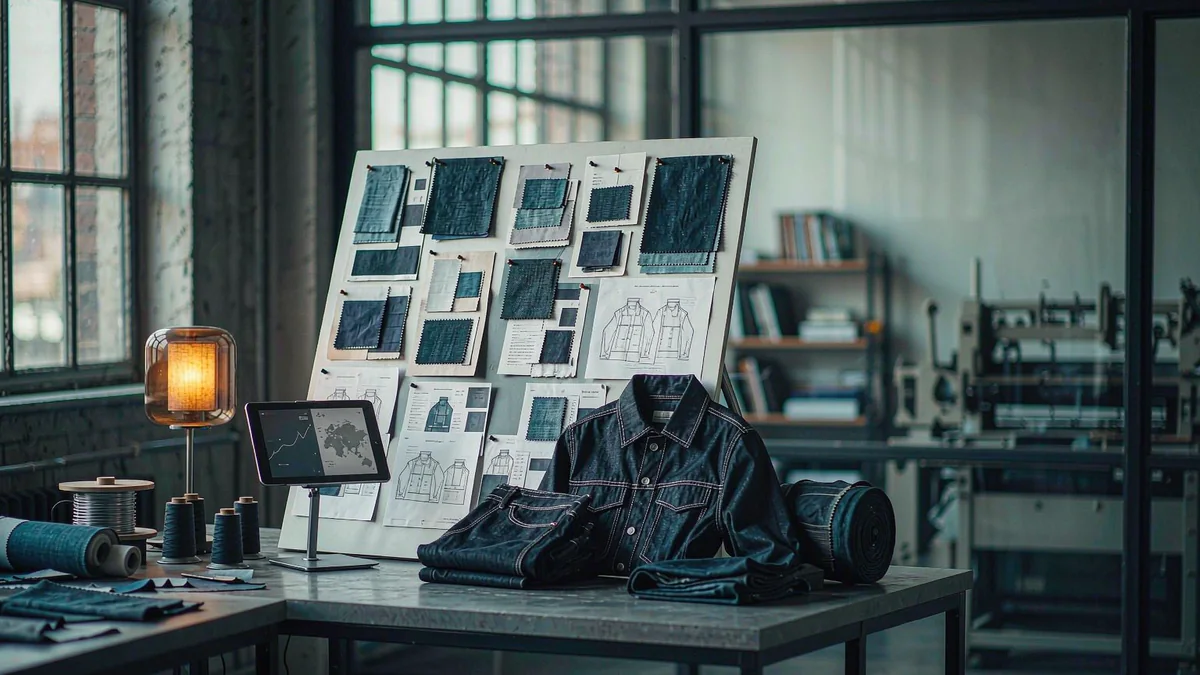
A factory order file usually shows this change before a shipment does. When a buyer shifts attention toward a casualwear capsule, the production team revises the line plan by separating core repeat styles from trial colors, reserves greige or standard knitted fabric for the repeat group, and moves the trial group into a smaller cutting lot. During inline inspection, the key checks are fabric weight, shade consistency, shrinkage, seam appearance, measurement points, and print or embroidery placement. The signed tech pack and approved size set remain the governing documents; a retailer sales result does not replace those controls.
Who Is Affected
The clearest exposure is in casual menswear: knitted T-shirts, sweatshirts, pullovers, lightweight overshirts, and relaxed trousers. The opportunity is strongest for buyers working in a value-to-mid price band where customers expect visible styling but remain sensitive to price and delivery speed.
Target markets should be selected from the buyer's own channel data rather than inferred from one US retailer. A US-focused buyer may use the result to review spring and autumn casualwear depth; a European or Asian buyer can use it only as a comparable retail signal after checking local sell-through, climate, and promotional intensity.
Order-size structure matters. Core black, navy, grey, and neutral styles can support a larger repeat order when the fabric, trims, and fit are already approved. Fashion colors, graphic treatments, and untested silhouettes should remain in a smaller opening order until sales data supports replenishment. This is a better interpretation of the result than increasing every menswear SKU at once.
What Buyers Can Do Now
- Split the assortment by evidence level. Keep proven casualwear blocks in the core buy and place new colors, graphics, or fits into a controlled test. Use the same measurement chart and construction standards across both groups so the comparison reflects demand rather than quality variation.
- Build a staged order calendar. Approve the fabric, trims, and size set for the core styles first, then reserve capacity for a repeat window. For trial styles, agree the reorder trigger, latest fabric booking date, and shipment cut-off before placing the opening order.
- Compare landed cost by price band. For each style, separate garment cost, decoration, packaging, freight, duty classification, and inspection cost. Confirm the applicable HS classification and current tariff treatment against the latest official customs text before committing the retail margin.
When This Read-Out Would Be Wrong
This interpretation would be wrong if Urban Outfitters' increase came mainly from categories outside menswear, a temporary promotion, a geographic mix change, or a one-off timing effect. It would also be wrong for a buyer whose own casualwear sell-through is slowing or whose channel serves a different customer and price band.
A second risk is treating export scale as retail demand. China's 2025 HS 6109 and HS 6110 export figures show the size of those trade categories, not a forecast for the next buying season. Buyers should reduce the order signal when their own weekly sell-through, return rate, or markdown exposure contradicts the retail cue.
Sources
- Ecotextile News: Urban Outfitters posts record Q3 sales and profit
- UN Comtrade: China's 2025 knitted T-shirt exports, HS 6109
- UN Comtrade: China's 2025 knitted pullover exports, HS 6110
Buyers can also review wholesale mens clothing and the apparel wholesale market for related assortment and sourcing context.
Frequently asked questions
What does Urban Outfitters' Q3 sales result mean for menswear buyers?
Treat it as a test trigger, not a broad menswear forecast. Urban Outfitters reported Q3 2026 net sales of $1.67 billion, up 8.9% year on year, but the article does not identify a menswear category, market, or price band behind the increase. Review casualwear exposure against your own sell-through and channel data.
Which menswear categories should I test after this sales signal?
Test knitted T-shirts, sweatshirts, pullovers, lightweight overshirts, and relaxed trousers, with trial quantities kept below proven core orders. The relevant signal is the 8.9% year-on-year increase in Q3 2026 net sales, not proof that every SKU will grow. Prioritize clear styling, repeatable fabric platforms, and short approval cycles.
How should I structure core and trial orders for casual menswear?
Keep proven black, navy, grey, and neutral styles in the core buy, while placing fashion colors, graphics, and untested silhouettes in a smaller opening order. Approve fabric, trims, and the size set for core styles first, then reserve a repeat window. The Q3 2026 result supports staged testing, not increasing every SKU.
What should a factory check before producing a casualwear reorder?
Use the signed tech pack and approved size set as the governing controls, then check fabric weight, shade consistency, shrinkage, seam appearance, measurement points, and print or embroidery placement during inline inspection. The $1.67 billion Q3 2026 sales result does not replace these checks, and export figures such as HS 6109 are not quality standards.