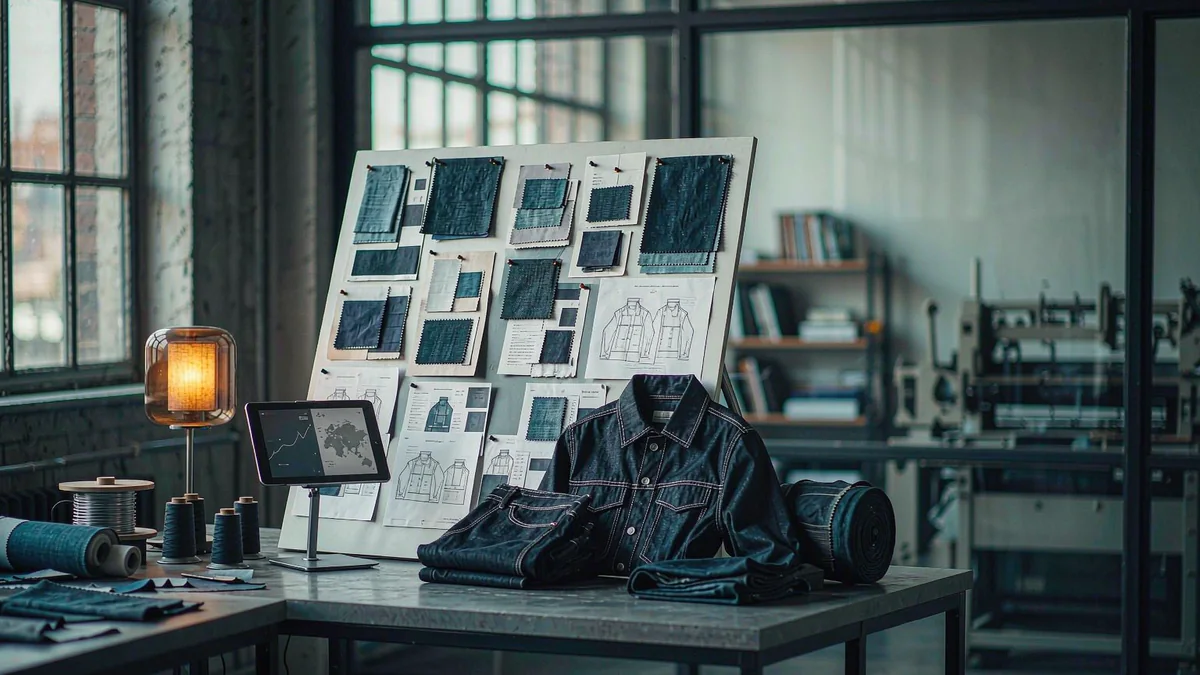
Bangladesh Cotton Loop Opens Circular Denim Supply
Bangladesh's Cotton Loop initiative puts recycled cotton trials on the denim agenda, with traceability, blend control and staged orders ahead of bulk replacement.
What Changed
On 8 November 2026, Textile Today reported that Bangladesh's Cotton Loop initiative aims to convert garment waste into a circular cotton supply chain. The immediate sourcing signal is for denim and cotton casualwear buyers: recycled-fiber development is moving closer to the production ecosystem, but the practical buying step is a controlled trial rather than an instant replacement of virgin cotton.
The latest complete annual trade data supplied for scale is 2025. China exported USD 10.45 billion of men's trousers under HS 6203 across approximately 1.84 billion units, and USD 4.30 billion of men's overcoats under HS 6201 across approximately 335 million units. These figures describe export value and reported quantity, not recycled-fiber use or Bangladesh's Cotton Loop output. They show why a small material change in high-volume categories can affect fabric approval, costing, inspection and replenishment decisions across a large sourcing market.
Why It Happened
The initiative responds to a basic material-flow problem: cutting scraps and post-industrial garment waste contain recoverable cotton, while brands are under pressure to show a more traceable fiber pathway. Recycling can reduce the amount of textile waste sent out of the apparel production loop, but mechanical recycling also changes fiber length, yarn behavior and fabric performance. This is why the commercial opportunity is likely to begin with selected blends and approved constructions rather than a universal switch.
For denim, the relevant cost question is not only the fiber price. Buyers also need to account for yarn specification, fabric weight in gsm, weaving performance, dyeing, finishing, shrinkage and testing. A recycled cotton blend may require a different yarn count or a controlled share of virgin cotton to preserve tear strength and appearance. This suggests that the first viable programs will be products where the brand can accept a defined recycled content range and approve the resulting hand feel, shade and durability.
Traceability is the channel issue. A buyer needs the recycled material claim to follow the fiber or waste stream through collection, sorting, spinning, weaving and garment production. In practice, the factory and buyer agree the fiber composition and claim language in the tech pack, record the approved mill and fabric lot, and retain transaction or chain-of-custody documents where the chosen certification system requires them. The signed material specification and supporting records should govern the claim used on the product page and care or hangtag copy.
Who Is Affected
The first affected categories are five-pocket jeans, denim overshirts, denim jackets and cotton casual trousers. These products have repeatable fabric platforms, visible material stories and established wash-development workflows. The opportunity is less straightforward for highly elastic denim, lightweight shirting and garments requiring demanding abrasion or recovery performance, where recycled content can alter stretch, strength or surface appearance.
The most practical price band is accessible-to-mid-market product where a buyer can test a material story without making the entire collection dependent on one new input. Premium lines may also use the initiative for traceability and circularity positioning, but they will usually demand a stronger evidence pack, tighter shade control and more extensive wear testing. This is a sourcing inference, not a reported output claim from the initiative.
Order structure matters. A small pilot or one controlled colorway is more suitable than a full seasonal replacement. Buyers working with wholesale jeans can test one approved denim construction, while wholesale denim jackets buyers can isolate the recycled-content trial from the main seasonal fabric program. The broader supplier relationship also matters: clothing suppliers should be able to identify the mill, fabric lot, fiber composition, waste source and production records attached to the trial.
On the factory floor, a recycled-cotton trial changes the paperwork before it changes the sewing line. The material control sheet records the approved fiber blend, yarn or fabric lot, gsm, width, shrinkage result and wash recipe. Cutting is released only after the fabric lot is matched to the sealed sample; during inspection, the team checks shade continuity, seam appearance, measurement stability and surface defects against the approved standard. For denim, the wash panel and bulk fabric swatch are kept with the production file so a recycled-content fabric is not substituted silently with a visually similar conventional lot.
Actions Buyers Can Take Now
- Start with one measurable denim trial. Select one jeans or jacket style, define the recycled-content percentage in the tech pack, and approve fabric weight, composition, stretch, tear strength, shrinkage, colorfastness and wash appearance before cutting. Keep the trial separate from the main bulk fabric booking until the sealed sample passes.
- Build a traceability pack into the purchase order. Require the supplier to list the waste or recycled-fiber source, spinning mill, weaving mill, fabric lot, garment factory and applicable claim documents. Match the document chain to the invoice, packing list and production lot. For inspection, use the signed measurement chart, approved shade band and an agreed AQL standard; a common apparel practice is AQL 2.5 for major defects, with key measurement tolerances agreed before bulk.
- Use staged replenishment instead of a full replacement. Place a pilot quantity for one market or channel, measure sell-through and returns, then release the next production stage only after fabric performance and claim documentation remain consistent. Keep a conventional approved fabric as a continuity option where the recycled fabric cannot meet strength, stretch or wash requirements.
When This Read-Out Would Be Wrong
This circular-sourcing interpretation would be wrong if the initiative remains limited to collection or demonstration activity without a repeatable supply of sorted cotton waste, stable yarn quality and mill-level documentation. It would also be wrong for products where recycled content causes unacceptable strength loss, pilling, stretch recovery problems, shade variation or wash inconsistency.
A buyer should also reconsider the staged approach if the brand's market requires a specific certified claim that the complete chain cannot support, or if a recycled blend is being marketed as fully recycled cotton. Regulations and labeling requirements vary by destination, so the applicable official text and current certification rules should govern the final claim. The position described here is based on the 8 November 2026 report and the latest complete annual trade data for 2025, viewed as of 9 November 2026.
Sources
- Textile Today: Cotton Loop initiative aims to turn Bangladesh’s garment waste into a circular cotton supply chain
- UN Comtrade 2025 China exports, HS 6203 men's trousers
- UN Comtrade 2025 China exports, HS 6201 men's overcoats
Frequently asked questions
What should I include in a recycled-cotton denim pilot?
Start with one jeans or denim jacket style and define the recycled-content percentage in the tech pack. Approve fabric composition, weight in gsm, stretch, tear strength, shrinkage, colorfastness and wash appearance before cutting. Keep the trial separate from the main bulk booking until the sealed sample passes.
What traceability documents should a recycled-cotton order include?
Require a traceability pack covering the waste or recycled-fiber source, spinning mill, weaving mill, fabric lot and garment factory. Match these records to the invoice, packing list and production lot. The signed material specification and applicable chain-of-custody documents should support the claim language used on the product.
What inspection standard should I use for recycled denim garments?
Use an agreed AQL standard, with AQL 2.5 described as a common apparel practice for major defects. Also approve the measurement chart, shade band, fabric gsm, shrinkage result and wash panel before bulk. During inspection, check shade continuity, seam appearance, measurement stability and surface defects against the approved standard.
When should I avoid replacing conventional cotton with recycled cotton?
Avoid a full replacement when the initiative lacks repeatable sorted cotton waste, stable yarn quality or mill-level documentation. Reconsider the trial if recycled content causes unacceptable strength loss, pilling, stretch-recovery problems, shade variation or wash inconsistency. The assessment is based on the 8 November 2026 report and 2025 trade data.