Buck's Heritage Knife Signals a Denim Value Band
Buck's Heritage knife pairs super steel, denim styling and an accessible price, giving menswear buyers a concrete cue for value-led denim capsules.
What Changed
Gear Patrol reported on November 25, 2026 that Buck's new Heritage knife combines super steel, denim styling and an accessible price. The item is a single product launch, not a reported change in apparel sales, factory capacity or consumer volume. Its useful signal for menswear is the combination of a material associated with durability, a recognizable denim look and a value-led price position.
For buyers, this creates a specific product-positioning cue: denim can support a practical, heritage-driven story without being placed automatically in a premium band. The relevant apparel categories are jeans, denim jackets and coordinated workwear-inspired separates. The market scope is broad international menswear, with the strongest fit in casual, heritage and outdoor-adjacent retail channels.
Why It Happened
The reported product brings three purchase cues together. Super steel supplies a performance story, denim styling supplies a familiar visual code, and the accessible price lowers the barrier to trial. This suggests that value-conscious customers may respond to products that make one visible material or construction detail carry more of the story, rather than relying on many expensive trims.
The apparel implication is not that knife buyers and clothing buyers behave identically. It is that the same value equation can be tested in denim: durable fabric, visible hardware or reinforcement, and a clear retail proposition. A denim jacket can use bartacks, rivets, contrast thread or a documented wash effect as the hero detail while keeping the rest of the construction controlled.
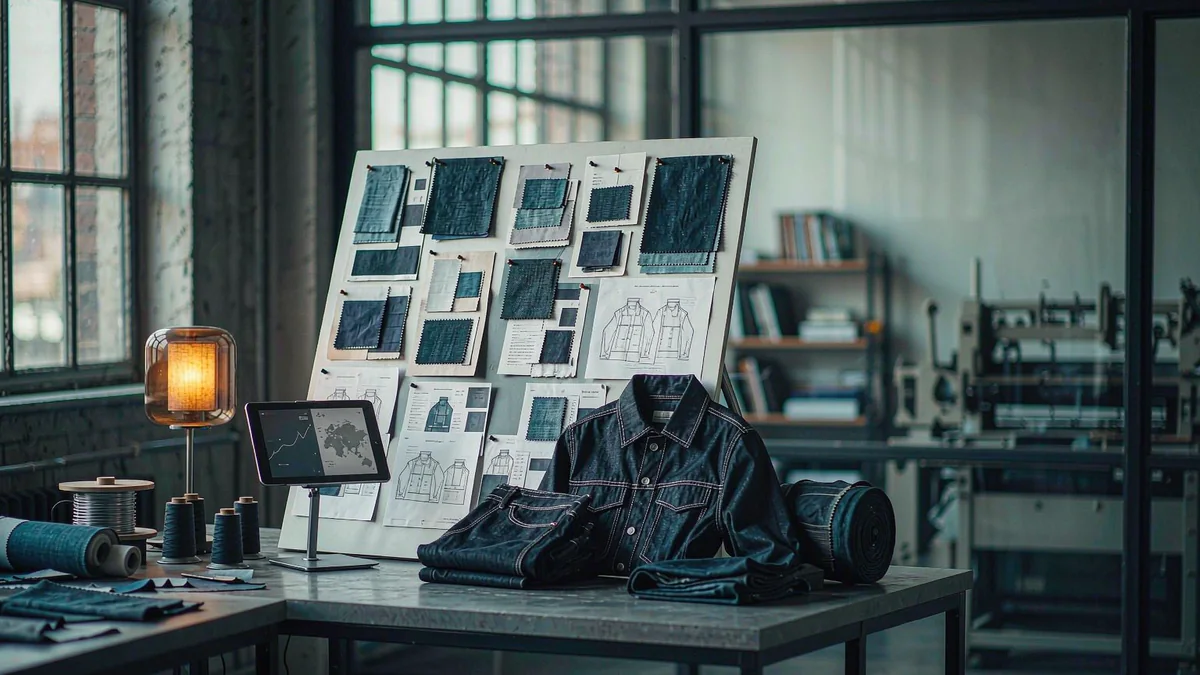
In a denim factory sample room, this positioning is settled through the tech pack and wash card rather than a slogan. The sample team records fabric composition and GSM on the BOM, marks pocket and belt-loop reinforcement on the construction sheet, and compares the washed sample against the approved shade standard. Before bulk, the buyer signs off the measurement chart, trim sample, wash recipe and packaging artwork; inspection then checks key measurements, shade consistency, seam security and trim attachment against the approved documents.
Who Is Affected
The clearest opportunity is in men's jeans and denim jackets, including overshirts and utility-inspired outerwear. Buyers targeting accessible or mid-value retail bands can use the Heritage story as a merchandising reference: make durability and denim character visible, but avoid adding premium complexity that the customer cannot see or understand.
This is most relevant to retailers in North America, Europe and other markets where heritage workwear, utility dressing and casual denim are established product languages. It suits opening orders that test a focused capsule rather than a deep multi-color program. A buyer can begin with one denim base, one wash direction and a limited trim package, then use sell-through and reorder feedback to decide whether to expand.
The signal is weaker for luxury denim, highly technical performance apparel and fashion programs whose value depends mainly on runway novelty. It is also weaker for buyers competing only on the lowest possible ticket, because visible hardware and wash development still require sampling, approval and quality control.
Relevant starting points include wholesale jeans and wholesale denim jackets.
What Buyers Can Do Now
- Build one value-led denim test capsule. Use a straight or relaxed jean and a matching denim jacket, then give each style one clear durability cue such as reinforced pockets, branded metal hardware or a defined wash effect. Keep the fabric, trims and construction bill consistent across the capsule so the retail message remains easy to explain.
- Convert the product story into approval documents. Specify fabric composition, GSM, shade standard, shrinkage allowance, seam construction, trim finish and wash appearance in the tech pack. Approve a pre-wash and post-wash sample, and make the signed sample the reference for bulk inspection. In common factory practice, key measurements are checked against the approved chart and major workmanship defects are controlled under an agreed AQL 2.5 inspection plan.
- Split the first order by risk, not only by size. Keep the first production run concentrated in the strongest size curve and one or two wash options, while reserving later volume for the styles that pass fit, shade and sell-through checks. Set the delivery calendar from fabric booking, trim arrival, cutting, washing, final inspection and packing instead of treating sewing time alone as the lead time.
When This Read-Out Would Be Wrong
This interpretation would be wrong if the Buck launch remains an isolated gear story with no carryover into apparel merchandising. It would also be wrong for a buyer whose customer prioritizes ultra-low price, formal tailoring or advanced technical performance over heritage styling and visible durability.
The value-band read can also fail when wash variation is high, hardware causes returns, or the denim hand-feel does not match the product promise. A strong sample concept is not enough: the buyer should release bulk only after shade, shrinkage, measurements, seam strength, trim attachment and packing details match the signed approval set. The Gear Patrol report supports a positioning signal, not a guaranteed change in denim demand or a guaranteed retail price outcome.
Sources
Frequently asked questions
How should I position denim at an accessible price point?
Position it around visible durability and a clear denim character, rather than adding premium details customers may not recognize. The article suggests a focused capsule with 2 styles, such as a straight or relaxed jean and a matching denim jacket, using one clear durability cue and a controlled fabric, trim and construction bill.
What details should go in a denim tech pack before sampling?
A denim tech pack should record the fabric composition and GSM, shade standard, shrinkage allowance, seam construction, trim finish and wash appearance. The article also recommends marking pocket and belt-loop reinforcement on the construction sheet and documenting the wash recipe, so the sample can be checked against defined requirements before bulk production.
What should I approve before bulk denim production?
Approve the measurement chart, trim sample, wash recipe and packaging artwork before bulk production. The article also recommends approving pre-wash and post-wash samples, then using the signed sample as the bulk inspection reference. Check measurements, shade consistency, seam security and trim attachment against the approved documents; a common agreed inspection plan is AQL 2.5.
How should I plan a first order for a denim capsule?
Keep the first run focused on the strongest size curve and 1 or 2 wash options, then reserve later volume for styles that pass fit, shade and sell-through checks. Plan delivery around fabric booking, trim arrival, cutting, washing, final inspection and packing, rather than counting sewing time alone.